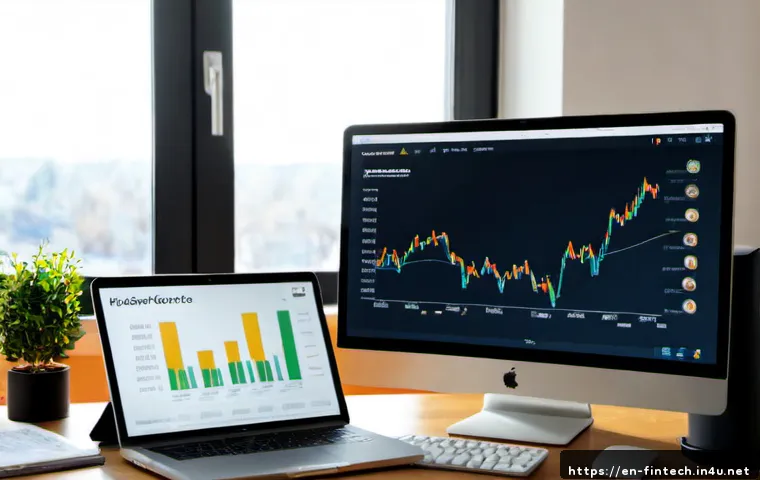
As the investment landscape evolves at lightning speed in 2024, AI-powered asset allocation is emerging as a game-changer for both individual investors and financial institutions.
With markets growing increasingly complex and volatile, traditional strategies often fall short in capturing opportunities or managing risks effectively.
I’ve noticed firsthand how integrating AI tools can transform portfolio management, making decisions smarter and faster. If you’re curious about how cutting-edge technology is reshaping investment strategies and what that means for your financial future, this deep dive into AI-driven asset allocation is a must-read.
Let’s explore how this innovation is setting new standards in wealth building today.
Revolutionizing Portfolio Strategy with Machine Learning Insights
Decoding Market Signals Through AI Analytics
When I first began experimenting with AI tools in my own portfolio, I was struck by how quickly these systems could sift through mountains of market data.
Unlike traditional methods that rely heavily on human intuition and historical patterns, AI analytics leverages machine learning algorithms to identify subtle trends and correlations that often go unnoticed.
This capability means that investors can anticipate market shifts more accurately and adjust allocations proactively. For example, while I used to spend hours reviewing economic indicators and news reports, AI now consolidates this information and presents actionable insights in real time, allowing me to react faster and with greater confidence.
Adaptive Asset Allocation: Learning and Evolving
One of the most fascinating aspects of AI-driven asset allocation is its adaptive nature. Instead of sticking rigidly to a pre-set strategy, these models continuously learn from new data, refining their recommendations as market conditions evolve.
I’ve noticed that portfolios managed with AI tend to be more resilient during volatile periods because the system recalibrates risk exposure dynamically.
This means that when sudden events like geopolitical tensions or unexpected earnings reports hit the market, AI can quickly adjust the weightings across asset classes—be it stocks, bonds, or alternative investments—to optimize returns while minimizing downside risk.
The Human-AI Collaboration in Decision Making
While AI provides powerful analytical capabilities, I’ve found that the best results come when investors combine these tools with their own judgment. AI excels at processing vast datasets and modeling complex scenarios, but it doesn’t replace the nuanced understanding of an experienced investor who can interpret broader economic contexts or personal financial goals.
In practice, I use AI-generated insights as a starting point, then apply my own perspective to fine-tune the allocation. This synergy creates a more balanced approach that leverages technology without losing the human touch.
Enhancing Risk Management with Predictive Analytics
Spotting Emerging Risks Before They Escalate
One of the biggest challenges in investing is managing unforeseen risks that can erode portfolio value overnight. What struck me about AI-powered risk tools is their ability to detect early warning signs by analyzing a wide array of indicators—from market sentiment and liquidity measures to macroeconomic variables.
These models can forecast potential drawdowns or volatility spikes with surprising accuracy, giving investors a crucial time advantage to rebalance or hedge their positions.
This proactive risk management approach has personally helped me avoid some sharp downturns that traditional models would have missed.
Quantifying Risk with Greater Precision
Traditional risk metrics often rely on historical volatility or fixed stress scenarios, which can underestimate the complexity of today’s markets. AI techniques, on the other hand, generate probabilistic risk assessments that incorporate real-time data and scenario simulations.
I’ve seen firsthand how this granular understanding of risk enables more informed decisions, such as adjusting exposure to specific sectors or geographies based on evolving conditions.
It’s like having a constantly updated risk dashboard that guides allocation tweaks with a higher degree of precision.
Balancing Return and Safety Through Dynamic Allocation
AI’s ability to optimize the trade-off between risk and return is a game-changer. By running millions of portfolio simulations and incorporating investor-specific preferences, AI models craft allocation strategies that aim for the best possible returns within a defined risk tolerance.
From my experience, this dynamic balancing act helps avoid the pitfalls of overly conservative or aggressive positioning. Instead, it fosters a more disciplined investment approach that adjusts fluidly as market environments shift.
Unlocking New Opportunities with Alternative Data
Beyond Traditional Financial Metrics
What really caught my attention recently is how AI integrates alternative data sources—like satellite imagery, social media trends, and supply chain insights—into asset allocation decisions.
These unconventional datasets offer fresh perspectives on company performance, consumer behavior, and macroeconomic trends that traditional financial statements might miss.
For example, I noticed that AI models tracking retail foot traffic via satellite data provided early signals about a consumer goods company’s sales trajectory, allowing for timely portfolio adjustments.
Gaining Edge Through Real-Time Insights
The real-time nature of alternative data means AI-powered systems can react faster than ever before. This immediacy is crucial in markets where information asymmetry can make or break investment outcomes.
From my experience, having access to these timely insights helped me capitalize on short-lived opportunities and avoid potential pitfalls that would have been invisible using conventional data alone.
Challenges and Ethical Considerations
Of course, incorporating alternative data raises questions about data quality, privacy, and ethical use. I’ve learned to carefully vet data sources and ensure compliance with regulations before integrating them into my investment process.
Transparency and responsible use are essential, both to maintain trust and to avoid unintended consequences. Balancing innovation with integrity is something every investor should keep in mind when exploring these cutting-edge tools.
Customizing Investment Strategies for Individual Goals
Personalized Portfolios Through AI Profiling
One of the most exciting benefits I’ve experienced with AI-driven allocation is the ability to tailor portfolios to individual risk preferences, time horizons, and financial objectives.
AI systems analyze personal data and behavioral patterns to create investment strategies that truly resonate with each investor’s unique situation. This level of customization goes far beyond the one-size-fits-all approach common in traditional financial advising, making investment plans more aligned with real-life goals.
Automated Rebalancing and Goal Tracking
Managing a portfolio often involves tedious manual rebalancing to maintain the desired asset mix. AI automates this process, continuously monitoring portfolio drift and making adjustments as needed to stay on track.
From my perspective, this hands-off feature not only saves time but also reduces emotional decision-making, helping to keep the investment journey disciplined and focused on long-term success.
Integrating Tax and Cost Efficiency
AI-powered tools also optimize portfolios by factoring in tax implications and transaction costs, which can significantly impact net returns. I’ve noticed that by intelligently timing trades and selecting tax-efficient instruments, AI helps preserve more of the gains.
This comprehensive approach ensures that portfolios are not only growth-oriented but also cost-conscious, enhancing overall wealth accumulation.
Comparing Traditional and AI-Enhanced Asset Allocation
Speed and Scale of Data Processing
Traditional asset allocation relies heavily on periodic reviews and manual analysis, which can be slow and limited in scope. AI systems, by contrast, process vast datasets continuously, enabling real-time portfolio adjustments.
This speed and scale allow investors to capitalize on fleeting opportunities that conventional methods might miss.
Precision in Risk and Opportunity Assessment
While traditional models often use broad risk categories and historical data, AI techniques apply granular, forward-looking analytics. This leads to more nuanced assessments of both risks and potential returns, helping create portfolios that better match evolving market dynamics.
Human Judgment and Machine Intelligence Synergy
AI doesn’t replace human expertise but rather complements it. The best outcomes come from combining AI’s computational power with an investor’s personal insights, values, and goals.
This partnership enhances decision-making quality and fosters more confident investing.
| Aspect | Traditional Asset Allocation | AI-Enhanced Asset Allocation |
|---|---|---|
| Data Processing | Manual, periodic, limited datasets | Automated, continuous, vast & diverse datasets |
| Risk Management | Historical volatility-based, static scenarios | Dynamic, probabilistic, real-time risk forecasts |
| Decision Speed | Slower, reliant on human analysis | Fast, real-time adjustments using AI insights |
| Customization | Generalized strategies, less personalized | Highly tailored portfolios based on individual data |
| Use of Alternative Data | Minimal or none | Integrates satellite, social media, and other novel sources |
Future Trends in AI and Investment Management
Integration of Explainable AI for Transparency
As AI models grow more complex, a key focus is on explainability—making sure investors understand how decisions are made. I believe this transparency will build trust and encourage wider adoption.
Being able to see the rationale behind allocation changes helps investors feel more comfortable and engaged.
Expansion of AI into ESG and Impact Investing
AI is increasingly used to evaluate environmental, social, and governance (ESG) factors, enabling investors to align portfolios with their values without sacrificing performance.
From my observations, AI’s ability to analyze vast ESG data sets is making sustainable investing more accessible and data-driven.
Collaboration Between Humans and AI Advisors
Rather than replacing financial advisors, AI is set to become a powerful tool that enhances their capabilities. Hybrid models where advisors use AI insights to offer personalized guidance will likely become the norm.
I see this as a win-win, combining technology’s efficiency with human empathy and judgment.
In Conclusion
Embracing machine learning in portfolio management has transformed how I approach investing, blending speed, precision, and adaptability. The fusion of AI insights with human judgment creates a powerful strategy that navigates complexity with confidence. As technology advances, this partnership will only grow stronger, offering smarter, more personalized investment solutions for the future.
Useful Information to Keep in Mind
1. Machine learning enables real-time analysis of vast and diverse market data, helping investors respond swiftly to changing conditions.
2. AI-driven portfolios adapt continuously, improving resilience during market volatility through dynamic risk adjustments.
3. Combining AI insights with personal experience results in balanced decision-making that leverages technology without losing the human touch.
4. Alternative data sources, such as satellite imagery and social media, offer unique perspectives that enhance traditional financial analysis.
5. AI tools also optimize tax efficiency and automate rebalancing, helping maintain alignment with individual financial goals while reducing emotional biases.
Key Takeaways
Incorporating AI into portfolio strategy significantly enhances data processing speed and accuracy, allowing for dynamic risk management and personalized asset allocation. However, the best outcomes arise when investors integrate these advanced tools with their own expertise and goals. Transparency, ethical data use, and ongoing human-AI collaboration are essential for building trust and maximizing the benefits of this evolving investment landscape.
Frequently Asked Questions (FAQ) 📖
Q: How does
A: I-powered asset allocation improve investment decisions compared to traditional methods? A1: AI-powered asset allocation enhances investment decisions by analyzing vast amounts of data in real-time, identifying patterns and trends that human analysts might miss.
Unlike traditional methods that rely heavily on historical data and fixed rules, AI adapts dynamically to market changes, helping investors respond faster to volatility and seize emerging opportunities.
From my experience, integrating AI tools into portfolio management has significantly reduced emotional biases and improved risk-adjusted returns, making the whole process more efficient and insightful.
Q: Is
A: I-driven asset allocation suitable for individual investors or only for large financial institutions? A2: AI-driven asset allocation is increasingly accessible to individual investors, not just large institutions.
Thanks to advancements in fintech, many user-friendly platforms now offer AI-powered portfolio management tailored to various risk profiles and investment goals.
Personally, I’ve found that even beginners can benefit from these tools, as they simplify complex decisions and provide personalized insights. While institutions may have more sophisticated systems, individual investors can still leverage AI to optimize diversification and timing without needing deep technical expertise.
Q: What are the potential risks or limitations of relying on
A: I for asset allocation? A3: While AI offers powerful advantages, it’s important to recognize its limitations. AI models depend heavily on the quality and scope of data; unexpected events or “black swan” scenarios may not be predicted accurately.
Additionally, overreliance on AI can sometimes lead to less human judgment, which is crucial in interpreting broader economic or geopolitical contexts.
From what I’ve observed, the best approach combines AI insights with experienced human oversight to balance innovation with prudence, ensuring decisions remain adaptive and well-rounded.